


If you’re considering switching from traditional combustion to vaping, shopping for your first device can feel overwhelming. At World of Smoke & Vape, you’ll encounter terms like “haptic feedback” and “precision temperature control.”
Understanding basic thermodynamics, particularly convection versus conduction, is essential. The way a vaporizer heats your material influences everything from the smoothness of the vapor to the lifespan of your material and the flavor you experience.
Let’s explore vaporizer engineering, examining how these heating methods work, their pros and cons, and how to choose the right one for your lifestyle.
What is Conduction Heating? (The Direct Contact Method)
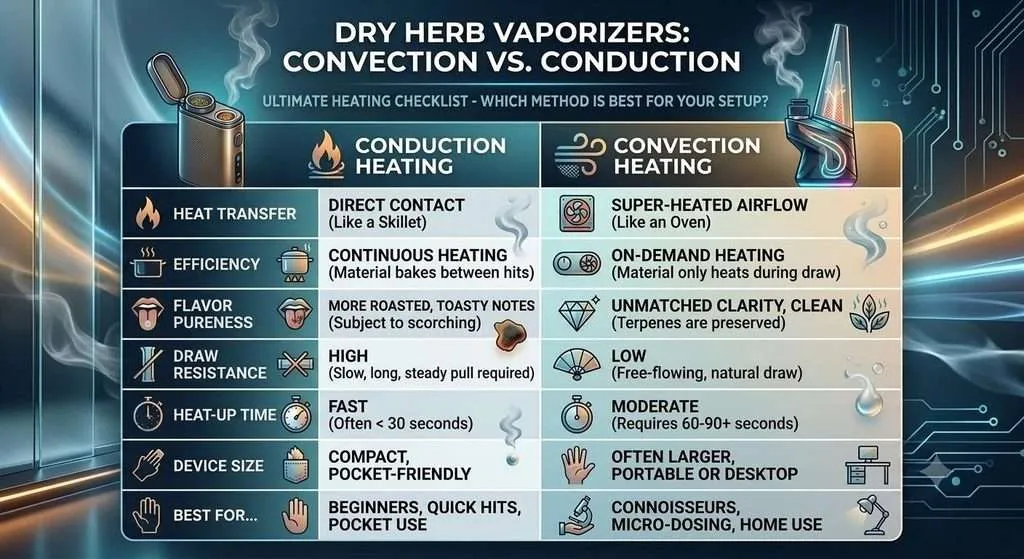
Think of conduction heating like cooking on a classic kitchen skillet. In a conduction vaporizer, your material is placed directly inside a chamber—usually crafted from ceramic, stainless steel, or gold-plated copper—and the chamber walls heat up directly. Because your dry herb is in physical contact with the blazing-hot surface, it begins to vaporize almost instantly.
The Pros of Conduction:
- Instant Gratification: Conduction devices heat up incredibly fast. Pocket-sized units like the G Pen Dash or the PAX Plus can reach your exact desired temperature in as little as 20 to 30 seconds, making them perfect for quick hits while you’re on the move.
- Thick, Dense Vapor Clouds: Because the heat source is in direct contact with your material, conduction vapes produce heavy, thick, visible clouds right from the very first draw. If you love the visual satisfaction of traditional smoke, conduction will feel very familiar.
- User-Friendly and Budget-Friendly: Conduction technology requires fewer complex internal components. This means conduction vaporizers are generally more compact, boast fantastic battery life, and are much easier on your wallet.
The Cons of Conduction:
- The “Skillet” Effect: Because the material touching the walls heats faster than the material in the center, you will need to open the chamber midway through your session and give it a quick stir with a multi-tool to ensure an even bake.
- Continuous Baking: A conduction oven behaves like a hot stove. Even when you aren’t actively drawing from the mouthpiece, your material is sitting against hot metal or ceramic, slowly cooking away.
- Best For: Beginners, budget-conscious buyers, and anyone looking for a sleek, ultra-portable device for quick sessions outside the house.

What is Convection Heating? (The Hot Air Method)
If conduction is a kitchen skillet, convection heating is a high-tech convection oven. In a true convection vaporizer, your dry herb never touches the actual heating element. Instead, the heating element is located in a separate chamber below your material. When you draw from the mouthpiece, it pulls fresh air past the heating element, turning it into precisely heated, super-hot air. This hot air rushes through your material, evenly extracting pure vapor.
The Pros of Convection:
- Unrivaled Flavor Purity: Because your dry herb isn’t sitting on a hot baking sheet, it never risks scorching. Convection delivers the absolute truest, cleanest flavor profile possible, allowing you to taste the distinct terpene notes of your material without a hint of toasted bitterness.
- Maximum Material Efficiency: Convection devices only cook your dry herb while you are actively inhaling. The moment you stop taking a pull, the hot air stops moving, pausing the vaporization process. This makes convection incredibly efficient; you can take one hit, leave the device on your desk, and come back an hour later to finish the rest of the chamber without wasting anything.
- Perfect, Even Extraction: Hot air flows evenly around every microscopic particle in the oven chamber. There is zero need to open up your device and stir your material halfway through a session.
The Cons of Convection:
- Slower Warm-Up Time: It takes a little longer to heat air than it does to heat metal. Convection units often require anywhere from 60 to 90 seconds to fully prime before you can take your first draw.
- Requires Proper Draw Technique: Convection vapes require slow, long, steady inhales (around 5 to 10 seconds) to transfer thermal energy from the hot air to the dry herb.
- Larger Footprint & Investment: Creating isolated, high-powered air paths requires sophisticated engineering. Convection devices—whether portable models or heavy-duty desktop powerhouses like the iconic Volcano Vaporizer—tend to be larger and command a higher price tag.
- Best For: Flavor connoisseurs, micro-dosers who prefer one hit at a time, home session enthusiasts, and anyone who prioritizes smooth, cool vapor.
The Hybrid Option: The Best of Both Worlds
Can’t decide between the quick hit of conduction and the clean flavor of convection? No worries, you don’t have to choose! The latest vaporizers out there feature Hybrid Heating Systems like the Storz & Bickel Mighty+ and other cool portable devices.
These hybrid units heat up the chamber walls for a big cloud right from your first puff (that’s conduction), while also using hot air to bring out those deeper flavors as you draw (that’s convection). It’s a smart, efficient setup for seasoned users who want an awesome daily vaporizer.
Find Your Ideal Device at World of Smoke & Vape
Choosing the right dry herb vaporizer really comes down to what fits your lifestyle best. If you’re all about that low-key portability and want to enjoy thick clouds on a night out, a small conduction vape is the way to go. But if you like to kick back, savor the different flavor notes of high-quality herb, and take your time with a bowl while chilling at home, then a convection setup is totally worth it.
Still want to see these devices up close before making your decision? Pop into your local World of Smoke & Vape storefront! Our team can walk you through the top designs from industry-leading brands, explain cleaning and maintenance routines, and ensure you walk out with the perfect hardware for your routine.